
01 / BRING THE IDEA
Prompt. Sketch. Reference.
Start with your brief or a visual reference. Explain who the interface serves, what they need to do and how the experience should feel.
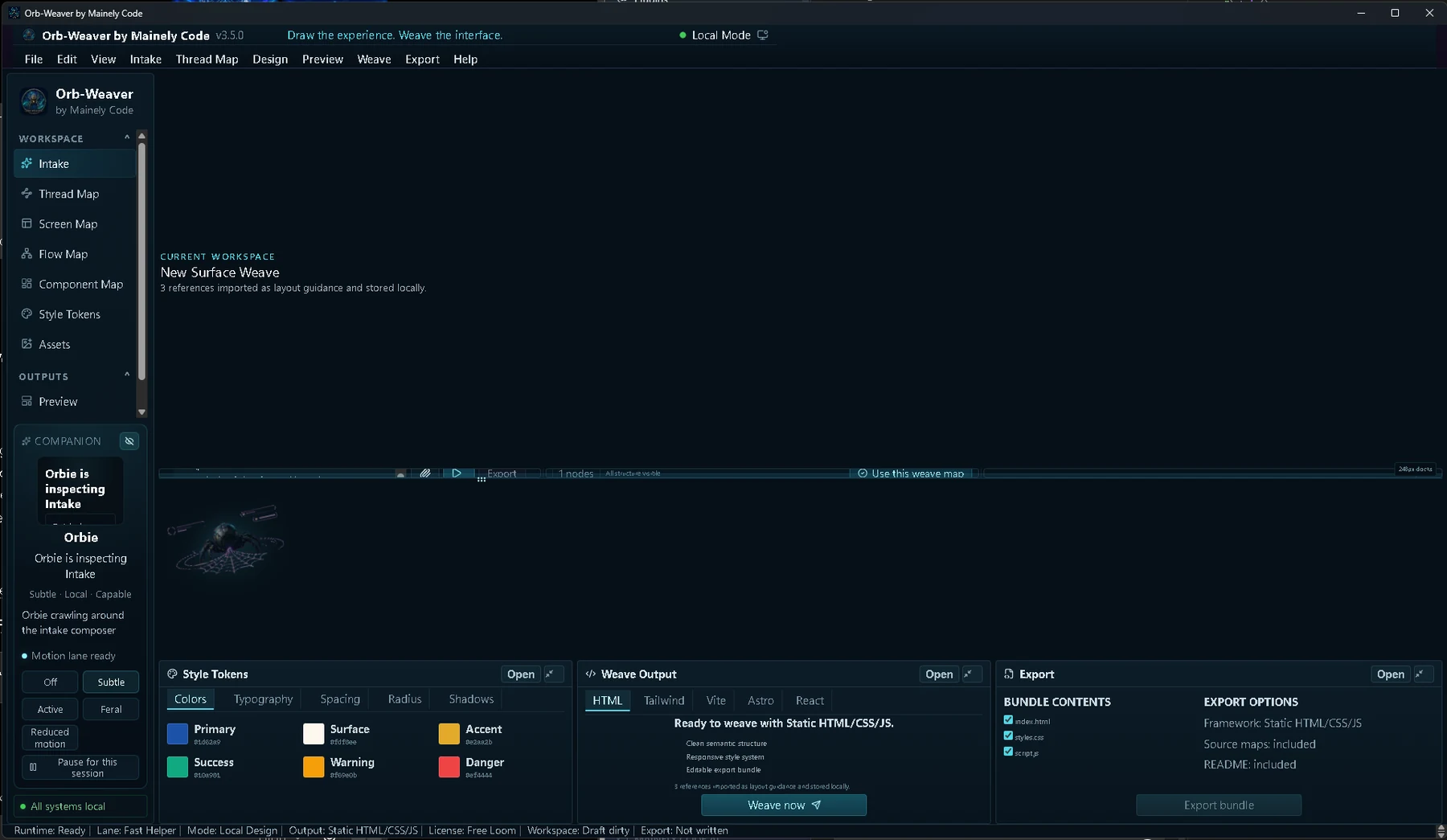
ORB-WEAVER · by Mainely Code
The local-first UI/UX design loom. Shape the interface before you engineer the whole application—turning prompts and visual references into structures you can understand, review and refine.
The Store listing describes the downloadable package. Product refresh work is not a claim that every upcoming capability has already shipped.

THE DESIGN LOOM
Threads of an interface come together in a study of motion, structure, and craft.
Design has its own workspace
ORB-WEAVER stays focused on the experience: screens, flows, components, style and editable front-end foundations.
01 / BRING THE IDEA
Start with your brief or a visual reference. Explain who the interface serves, what they need to do and how the experience should feel.
02 / REVIEW THE STRUCTURE
Thread Maps, interface structure and style tokens make the design reviewable before generation. Correct the interpretation before weaving.
03 / WEAVE & REFINE
Work toward a preview and front-end files you can inspect and refine. Supported intake and export paths depend on the installed release.
Orbie is getting a bigger loom
The refresh brings a more conversational workspace and stronger UI/UX guidance, while keeping the spider, the web and the design process at the center.
Shared product foundations should make the work easier—not turn ORB-WEAVER into another Buildroom edition. Final model choices and exports follow the qualified package.
Two jobs. Two tools.
THE DESIGN WORKSPACE
Interface ideas, visual references, flows, components, design tokens and editable front-end foundations.
View ORB-WEAVERTHE ENGINEERING WORKSPACE
Repository context, implementation, governed code changes, tests and verification evidence.
Explore Buildroom